Before You Bet, Read This VAR Breakdown
Video Assistant Referee, or VAR, is a football officiating system that reviews potential clear and obvious errors in four categories: goals, penalties, direct red cards, and mistaken identity. The sys...

Before You Bet, Read This VAR Breakdown
Video Assistant Referee, or VAR, is a football officiating system that reviews potential clear and obvious errors in four categories: goals, penalties, direct red cards, and mistaken identity. The system operates in competitions approved under International Football Association Board (IFAB) rules, using multiple broadcast cameras, replay operators, and a VAR team located in a video operation room. VAR does not replace the referee; the on-field referee makes the final decision after receiving information or completing an on-field review. The protocol contains no fixed review time limit, because accuracy takes priority over speed, and play cannot normally be reviewed after a restart except in narrowly defined cases. At the 2026 FIFA World Cup, VAR decisions will remain relevant to match analysis, player props, and in-play markets. Before staking money, separate a confirmed ruling from a possible review and check the official match feed.
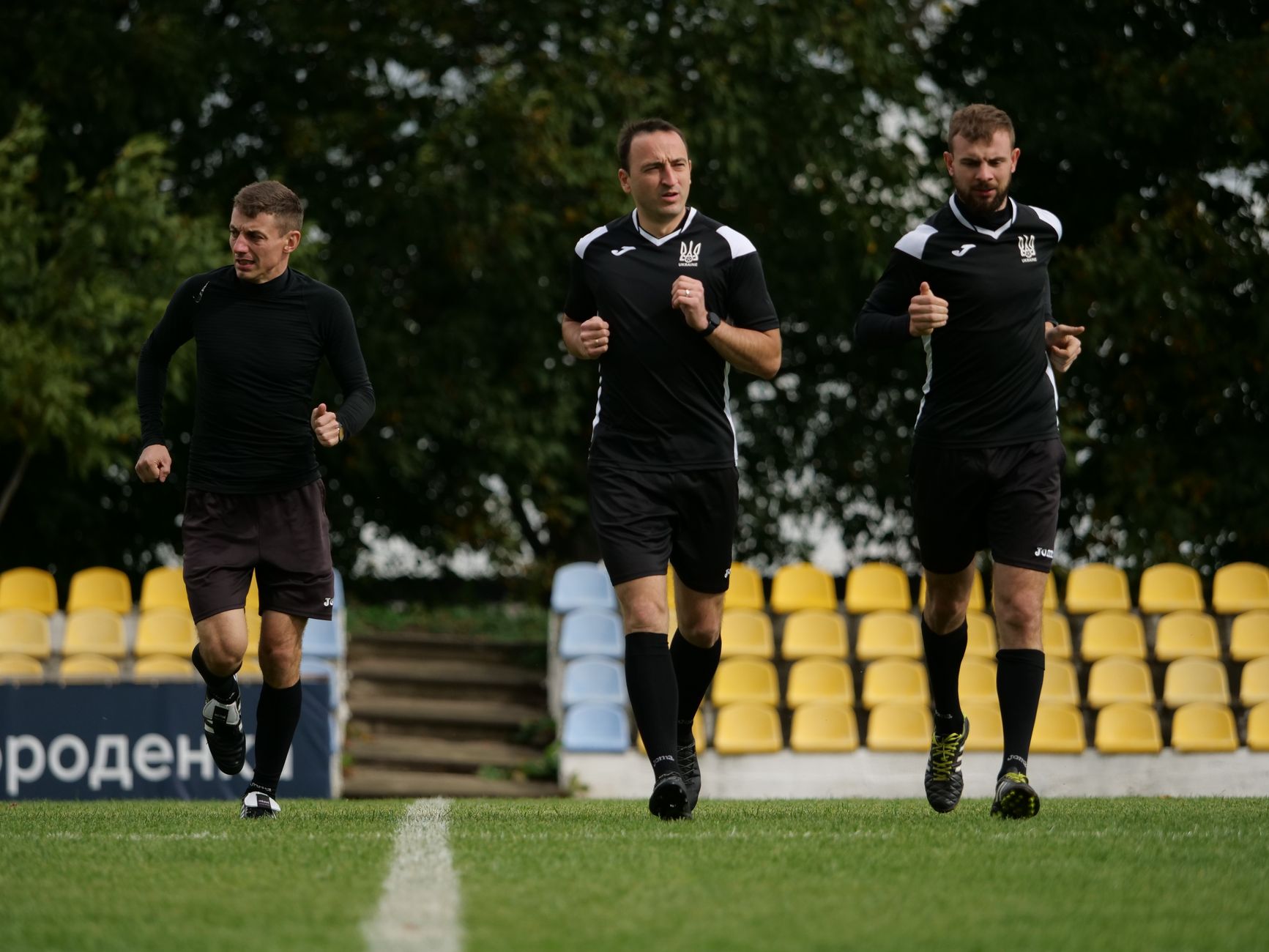
Photo by Володимир Король on Pexels
VAR is easy to misunderstand because television compresses a multi-stage process into a few seconds of dramatic graphics. A goal disappears, the crowd protests, a referee touches an earpiece, and commentators announce that “VAR is checking.” That phrase is not a ruling. It is merely the beginning of a technical and legal assessment. If you are tracking match predictions through Pitch Notes, this distinction matters: a possible review is not the same as a confirmed change, and a delayed restart is not evidence that the original decision will be overturned.
Want the essential football technology explained before the next fixture?
Before 2025: how did VAR work?
Before 2025, VAR worked under the same central principle used today: intervention was justified only when video evidence indicated a “clear and obvious error” or a “serious missed incident” involving a reviewable category. The framework was developed by IFAB and implemented in major competitions after testing in domestic leagues and international tournaments, including the FIFA World Cup and UEFA Champions League. The referee still made an initial decision, while the VAR and assistant VAR checked the relevant footage in the background.
Before assessing what VAR changed, ask a more useful question: what was actually reviewable? Under the IFAB Video Assistant Referee protocol, the accepted categories are:
- Goal or no goal: This includes an offside offence, attacking foul, handball, or ball-out-of-play incident in the attacking phase before a goal.
- Penalty or no penalty: The team may receive or lose a penalty after review of an offence inside the penalty area.
- Direct red card: Serious foul play, violent conduct, or another sending-off incident may be checked, but a clearly incorrect second yellow card is generally outside the VAR remit.
- Mistaken identity: The wrong player may be cautioned or sent off, and VAR can help identify the actual offender.
The word “direct” matters. VAR is not a general-purpose referee appeal system, and coaches cannot demand a review as if they were challenging a call in tennis. The VAR automatically checks relevant incidents, then recommends action only when the threshold is met. As IFAB states, “The referee must always make a decision”; in other words, VAR is an assistant rather than a second authority. For a deeper rules reference, consult our [Internal Link: football offside rules explained] before interpreting a marginal goal.
What happens during a standard review?
First, the on-field referee makes a decision, even if play continues. Second, the VAR team checks the incident using available camera angles and replay speeds. Third, the VAR either confirms the original ruling or recommends an on-field review, except for factual decisions that can be settled directly through the video process under the competition’s operating model. Finally, the referee communicates the decision and restarts play according to the Laws of the Game.
That sequence creates an important betting distinction. A goal can be provisionally recorded, markets can be suspended, and the final result can still change. However, a market suspension does not tell you which side the operator expects to win; it only signals that the event is commercially unsafe to settle at that moment. The sensible approach is to record the timestamp, the original ruling, the review category, and the final decision. I track those separately because memory turns uncertainty into false confidence, and false confidence is expensive.
[Internal Link: VAR betting impact and live odds]
The 2026 shift
What changed for players and viewers in 2026?
The 2026 shift is not a single new VAR rule; it is the scale and context of its use during the FIFA World Cup 2026, hosted across the United States, Canada, and Mexico. The tournament’s wider geography, expanded competition format, differing stadium environments, and worldwide broadcast audience make communication and consistency especially important. FIFA remains the governing body for the tournament, while IFAB Laws define the officiating framework. The core VAR categories therefore remain goals, penalties, direct red cards, and mistaken identity rather than every disputed moment.
For players, the practical shift is behavioural. Defenders must manage penalty-area contact more carefully, attackers must hold disciplined offside positions, and substitutes must understand that an apparently finished incident can return to the referee’s screen. For supporters and bettors, the shift is informational: more cameras and higher-quality feeds may clarify factual questions, but they do not eliminate judgment calls. Whether contact reaches the threshold of a foul, whether a hand position is punishable, and whether an action is reckless or violent still involve law-based interpretation.
A common mistake is to treat the newest camera angle as automatically decisive. It is not. A high-resolution image may establish where a player’s foot was, but it cannot by itself determine whether a challenge is careless, reckless, or excessively forceful. That is why “technology” and “decision” should remain separate columns in any match model.
See how tournament officiating affects serious pre-match analysis.
How does VAR handle offside in 2026?
VAR handles offside by reconstructing the relevant moment of the pass, locating the second-last defender and the potentially offside attacker, then determining whether the attacker was involved in an offence. Semi-automated offside technology can assist with timing and player-position data, but the final football decision still belongs to the match officials under the competition protocol.
Offside is often described as a line-drawing exercise, yet the operational question is more specific: which frame shows the instant the ball was played or touched by the teammate? Selecting that frame can affect the entire outcome when a shoulder, knee, or boot is only marginally beyond the permitted line. Technology can identify body coordinates, but the law excludes certain body parts, including the hands and arms, from offside positioning. The assistant referee’s flag may therefore be delayed while the attack continues, allowing VAR to examine the complete sequence.
The key evidence chain usually includes:
- The pass or touch that initiates the potential offside offence.
- The attacker’s legal scoring body part relative to the second-last opponent.
- Whether the attacker interfered with play, challenged an opponent, or gained an advantage.
- Any earlier foul, handball, or ball-out-of-play event in the attacking phase.
This is one reason stoppage-time expectations should be conservative. A lengthy check can arise from a difficult frame, multiple possible offences, or a need to establish the complete attacking phase. It does not necessarily indicate incompetence, conspiracy, or a predetermined correction.
What changed for players?
VAR changed player incentives by increasing the cost of hidden or marginal misconduct. A defender who once relied on the referee missing a late pull may now face a penalty review; an attacker who deliberately seeks contact may have the incident replayed from angles that contradict the first impression. The system also changed celebration behaviour, because players and supporters know a goal is not entirely secure until the check is complete.
Yet VAR did not make football perfectly objective. Consider three types of evidence:
- Geometric evidence: offside position, goal-line crossing, and ball location are comparatively measurable.
- Event evidence: whether a foul occurred before a goal or whether a handball preceded an attack requires replay interpretation.
- Discretionary evidence: the seriousness of contact, the nature of intent, and the level of force remain referee judgments.
That hierarchy provides a better explanation for disagreement than the lazy claim that VAR is either infallible or useless. The closer a decision sits to geometry, the more likely video can settle it cleanly. The closer it sits to sanction and context, the greater the possibility of two defensible interpretations. According to FIFA’s Laws of the Game resources, the governing laws still require officials to apply football judgment, not merely follow pixels.
Here is a less obvious operational point: the final image shown to viewers may not be the image that persuaded the VAR team. Broadcast packages prioritise clarity and drama, while officials can access synchronized angles, tactical cameras, and additional technical feeds unavailable to the audience. Therefore, judging a decision solely from one television replay is a poor method. I would not build a position around a clip until the official ruling and competition explanation are available.
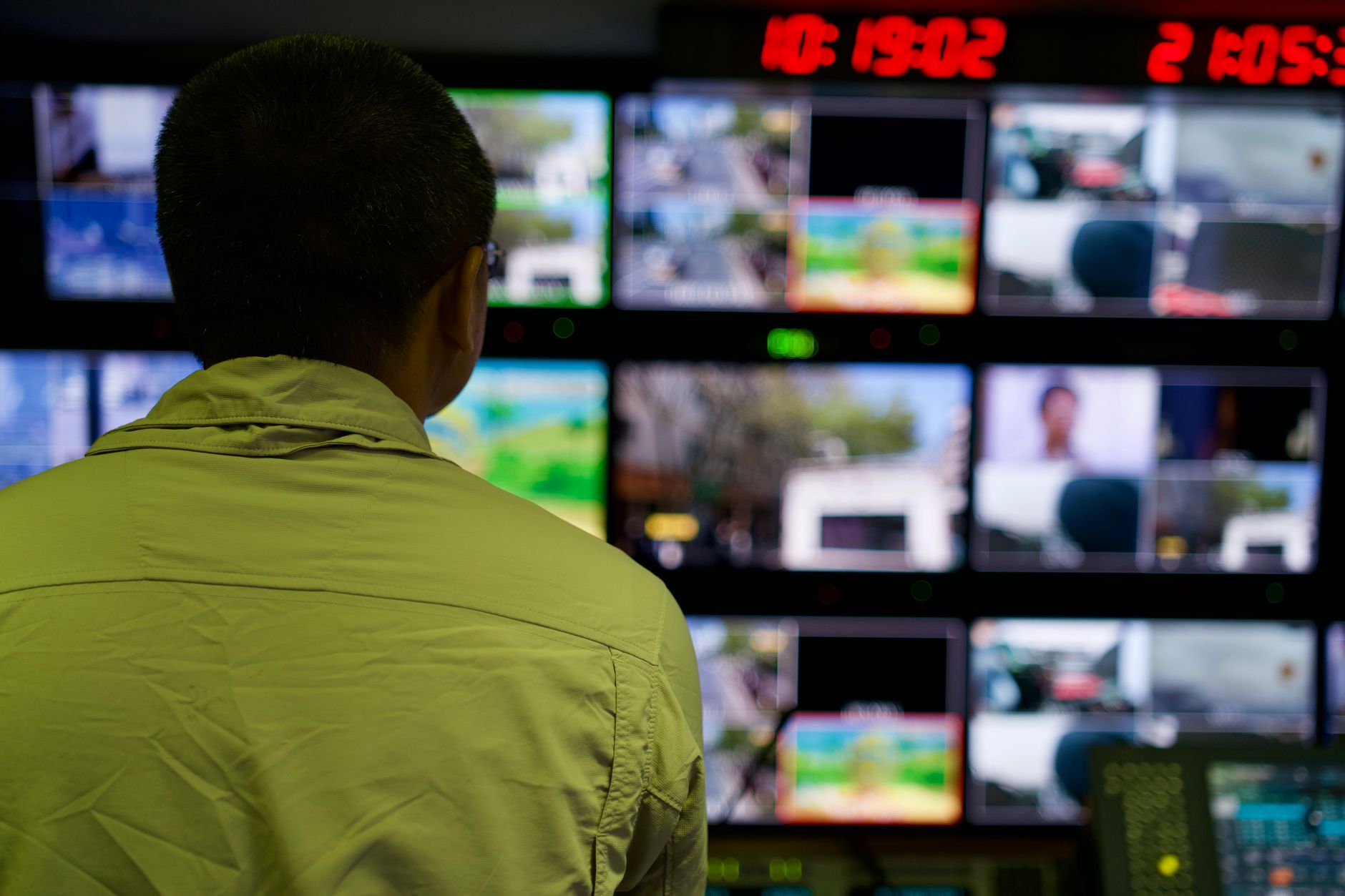
Photo by Samon Yu on Pexels
For player markets, VAR introduces asymmetric risk. A striker’s goal can be removed after a review, while a defender’s foul may become a penalty and a card. However, not every potential incident changes the settlement. Operators apply their own rules to goal scorers, player cards, corners, and same-game combinations, and those rules can differ by provider. Record the bookmaker’s market terms before kickoff, particularly when betting on a player to score or on a match result linked to a disputed goal.
To see the analytical side of these decisions, use our [Internal Link: player statistics for World Cup predictions] rather than relying on viral clips or emotional commentary.
What this means now
What does VAR mean for football betting?
VAR means football bettors must price decision delay, market suspension, and reversal risk rather than treating a live score as permanent. A goal may temporarily move match odds, but if the incident is under review, the apparent price can be informationally stale. The disciplined response is to wait for settlement clarity, compare the confirmed score with the original event, and check whether the market rules void or reprice affected selections.
My own rule is stubbornly simple: never chase a price created by a provisional goal. If a market reopens at a dramatically shorter price after an attacking team scores, I first ask whether VAR has completed its check and whether the operator has resumed normal settlement. A short price is not automatically value, and a suspended market is not an invitation to guess.
Track these variables during a match:
- Original score and minute of the incident.
- Type of review: goal, penalty, red card, or mistaken identity.
- Whether the referee conducts an on-field review.
- Final ruling and restart location.
- Any cards or disciplinary actions issued during the review delay.
- Bookmaker settlement language for the selected market.
The official protocol also states that there is no fixed time limit for a review. That detail affects live trading because a position may remain unavailable longer than expected, especially when an incident involves an attacking phase with several possible offences. Patience is not passive here; it protects the net position from reacting to information that is incomplete.
What does that look like numerically? Suppose a team is priced at 1.80 to win immediately after a goal, but the goal is under review. The implied probability before margin is approximately 55.6 percent, yet that number assumes the goal stands and the market is accurately settled. Until the decision is confirmed, the effective outcome is conditional, not final. Treating 1.80 as a normal price is therefore a category error. Or am I wrong to call an unsettled event an unsettled event?
Want a cleaner framework for match-day decisions?
Why do VAR reviews sometimes feel inconsistent?
VAR reviews feel inconsistent because factual verification and subjective interpretation are handled differently, while television coverage often presents both as if they were the same process. An offside line may be resolved through positional evidence, but a penalty decision can depend on contact, player movement, and whether the action meets the threshold for an offence. Different camera angles, referee crews, competition instructions, and communication quality can also influence the public perception of consistency.
The phrase “clear and obvious error” is itself a high threshold. VAR is not designed to replace every close decision with the personal preference of the video official. If two reasonable officials could reach different conclusions from the available evidence, the original decision may stand. Conversely, if video plainly demonstrates that the referee missed a relevant offence or punished the wrong player, intervention becomes more likely.
There is also a timing effect. Fans remember a 90th-minute overturned goal more vividly than a second-minute corrected offside call, even though the underlying protocol may be identical. The emotional value of the incident distorts the perceived error rate. Pitch Notes can use match reports, referee appointments, team tactics, and player statistics to add context, but no prediction model should pretend that every discretionary review can be forecast with the precision of a spreadsheet.
A further information-gain point is that review consequences are not always symmetrical. If play continues after a reviewable incident, disciplinary action in the intervening period may still stand even if the original decision changes, except in specific cases such as stopping a promising attack or denying an obvious goal-scoring opportunity. If play has restarted, a review is generally closed, with narrow exceptions for mistaken identity and certain serious misconduct incidents such as violent conduct, spitting, biting, or extremely offensive abuse.
That means a bettor should not assume that every later replay can reopen an earlier event. The restart is a procedural boundary. In practical terms, a corner kick, free kick, or kickoff may end the review window unless the incident falls within a specified exception. This is a better operational guide than simply asking whether “VAR can check it.” The correct question is whether the Laws of the Game still permit that particular review at that particular point.
Three predictions for next quarter
What will happen to VAR usage next quarter?
The most defensible predictions for the next quarter concern implementation and analysis rather than a dramatic abolition or expansion of VAR. FIFA, IFAB, UEFA, and domestic competitions are likely to focus on decision speed, communication, semi-automated support, and referee consistency. These are predictions, not confirmed rule changes, so the responsible approach is to distinguish likely operational trends from published regulations.
Prediction one: semi-automated offside support will become more visible. Major competitions are likely to present more explanatory graphics and synchronized animations, particularly when marginal offside decisions affect goals. The technology should reduce frame-selection ambiguity and speed some factual checks, but it will not remove judgment around interference or active involvement.
Prediction two: public communication will become more important. Supporters expect to understand why a goal was removed or a penalty awarded. Referee announcements, stadium displays, broadcaster explanations, and competition reports may therefore receive greater attention. Transparency will not satisfy every disagreement, but silence leaves room for inaccurate narratives.
Prediction three: betting models will separate factual and discretionary VAR risk. A serious match model can estimate how frequently a team enters the penalty area, concedes set pieces, or uses a high defensive line; it cannot reliably convert every referee interpretation into a fixed probability. The next quarter should reward analysts who track review categories, referee tendencies, and market settlement behaviour without claiming certainty.
The sensible conclusion is not that VAR makes betting impossible. It is that VAR changes the information timetable. A goal is an event; a confirmed goal is a settled event. Isn’t that the point?
[Internal Link: 2026 World Cup match predictions]
How should fans prepare for VAR-heavy matches?
Fans should prepare by learning the four review categories, understanding the offside process, and checking official competition information rather than relying on social-media summaries. Before a FIFA World Cup 2026 match, identify the referee team, the broadcaster’s review graphics, and the bookmaker’s settlement terms if you plan to wager. During the game, note the original decision and wait for the referee’s final signal before treating the incident as settled.
A useful preparation checklist is:
- Save the official IFAB Laws of the Game reference.
- Confirm whether the competition uses VAR and which incidents are reviewable.
- Check how your operator settles overturned goals, cards, penalties, and player props.
- Avoid staking immediately after an unconfirmed goal or red-card review.
- Compare the final decision with the match report after the game.
- Record the result separately from your prediction quality.
That final step is more valuable than it sounds. A correct prediction can win despite poor reasoning, and a losing prediction can be based on sound process. If VAR reverses a goal, do not rewrite your pre-match analysis as though the reversal had been predictable. Track the original position, the information available at the time, and the confirmed outcome. Investors call this maintaining an audit trail; football bettors should do the same.
For a broader tournament view, explore our [Internal Link: FIFA World Cup 2026 team tactics guide], then compare tactical exposure with the referee and VAR context.
Is VAR ultimately good for football?
VAR is good at correcting certain high-impact factual errors, but it is not a universal cure for controversy. It has particular value when a goal is clearly offside, a ball has crossed the goal line, the wrong player is sent off, or a serious incident was missed entirely. Its limitations appear most clearly when the underlying law requires judgment about contact, intent, advantage, or force.
The trade-off can be summarised as follows:
- Benefit: fewer decisive factual errors in goals, penalties, red cards, and identity.
- Cost: interruptions, delayed celebrations, tactical uncertainty, and disputes over subjective thresholds.
- Best use: targeted intervention under a high threshold.
- Weak use: treating every close call as an invitation to relitigate the match.
The answer depends on what supporters expect from officiating. If the objective is perfect agreement, VAR will disappoint because football laws contain interpretation. If the objective is to reduce obvious match-changing mistakes while leaving the final authority with the referee, the system has a coherent purpose. That is the standard IFAB describes, and it remains the most useful one for judging VAR in 2026.
Frequently Asked Questions
Q: What is VAR in football?
A: VAR means Video Assistant Referee, a match official who reviews video footage to help the referee identify clear and obvious errors or serious missed incidents. Under the IFAB protocol, reviews focus on goals, penalties, direct red cards, and mistaken identity. VAR does not independently referee the match or replace the on-field official. The referee always makes the final decision, either accepting information from the VAR team or conducting an on-field review.
Q: How does VAR work step by step?
A: VAR works by checking the referee’s decision, identifying potentially reviewable incidents, and recommending intervention only when the protocol threshold is met. The video team studies multiple angles, replay speeds, and relevant phases of play, then communicates with the referee. The referee may keep the original decision, change it after receiving factual information, or inspect the pitchside monitor. Play restarts only after the final decision and any required disciplinary action are completed.
Q: What is the difference between VAR and an on-field review?
A: VAR is the video-assistance process, while an on-field review is the referee personally watching replay footage at the pitchside monitor. The VAR team can recommend a review, but only the referee can initiate and complete the final decision. Factual matters, such as some offside positioning questions, may be resolved through communication without a monitor visit. Subjective decisions, such as many penalty or red-card judgments, more commonly involve an on-field review.
Q: Can VAR review every foul or yellow card?
A: No, VAR cannot review every foul, ordinary yellow card, or disputed throw-in. The recognised categories are goal or no goal, penalty or no penalty, direct red card, and mistaken identity. A second yellow card is generally not reviewable unless the incident also involves mistaken identity or another exceptional protocol circumstance. This limited scope prevents the video system from turning football into a continuous appeal process.
Q: Why does VAR sometimes overturn a goal after several minutes?
A: VAR may overturn a goal after several minutes because officials must examine the complete attacking phase and determine whether a reviewable offence occurred before the finish. They may need to select the correct pass frame, check an offside position, assess a handball, or identify an earlier foul. There is no universal fixed time limit under the IFAB protocol. Accuracy is prioritised, although competitions and broadcasters still try to reduce unnecessary delay.
Q: Does VAR make football betting safer?
A: VAR can make certain factual outcomes clearer, but it does not make football betting safe or eliminate financial risk. A provisional goal, penalty, or red card can create temporary odds that later change when the review concludes. Bettors should wait for the confirmed ruling, read the operator’s settlement rules, and avoid chasing markets immediately after a review signal. VAR reduces some officiating uncertainty while introducing timing and suspension risk.
Q: What should I do if a VAR decision appears wrong?
A: If a VAR decision appears wrong, check the official match report, competition explanation, and the exact Laws of the Game before concluding that the protocol was breached. Television viewers may not see every camera angle or the complete attacking phase available to officials. Record the incident, category, original ruling, final ruling, and restart, then compare it with the relevant IFAB rule. For betting disputes, contact the operator with the market reference and settlement terms rather than relying on social-media commentary.
The practical conclusion is straightforward: learn the protocol, wait for confirmation, and keep your analysis separate from your frustration. Pitch Notes is designed for that broader process, combining FIFA World Cup coverage with match predictions, tactical context, and player statistics. VAR is neither magic nor theatre; it is a constrained decision-support system. Use it as evidence, not as an excuse to abandon discipline.
Ready to follow the 2026 tournament with a more structured approach?
Thank you for reading this dispatch.
Pitch Notes · The Digital Broadsheet · Issue No. 001