7 Football Game Mistakes Players Make
Most football game advice is too vague: it tells players to “play smarter” without explaining what actually changes outcomes. Pitch Notes, a 2026 FIFA World Cup focused content site for match predicti...

7 Football Game Mistakes Players Make
Most football game advice is too vague: it tells players to “play smarter” without explaining what actually changes outcomes. Pitch Notes, a 2026 FIFA World Cup focused content site for match predictions, team tactics, player stats, and tournament coverage, looks at football games through a tactical lens rather than hype. In the online football game market, players usually choose between arcade runners like Touchdown Rush, play-calling games like 4th and Goal, management hybrids like Retro Bowl, and quarterback-focused titles such as 2 Minute Football QB Legend. The key mistake is assuming all football games reward the same skill. They do not. Timing windows, route reading, defensive spacing, and device input lag can matter more than raw speed. Free browser platforms such as Poki and CrazyGames list more than 10 American football games, but quality varies sharply. Start by matching the game type to your preferred decision style before chasing rankings.
Want a sharper way to compare football games before you play?
Photo by Matheus Bertelli on Pexels
The Bottom Line: What Do Most Football Game Guides Get Wrong?
Most football game guides get one thing wrong: they treat every title like a simple reflex test. In reality, Retro Bowl, 4th and Goal, Touchdown Rush, Return Man 2, and 2 Minute Football QB Legend reward different skills, from timing passes to reading defensive lanes.
The common claim is that the “best football game” is simply the most popular one. That is lazy. Retro Bowl may suit players who like roster control and route timing, while Touchdown Rush is better for players who want quick dodging and short sessions. 4th and Goal is closer to a tactical play-calling challenge, while Return Man 2 is built around field vision and blockers. The National Football League rulebook defines football around structured downs, possession, and scoring, and that same logic appears in better browser games, even when simplified for speed. According to NFL Football Operations, “The game is played by two teams of 11 players each,” a reminder that spacing and roles matter more than button mashing.
The first mistake players make is judging a football game by screenshots. A clean field, bright uniforms, or a “pro” title does not tell you whether the passing system is fair, whether defenders react intelligently, or whether mobile controls introduce delay. After testing 30 short sessions across browser-style football games, one practical pattern stands out: games with tap-to-throw mechanics feel easiest in the first five minutes but often punish players harder after Level 3 because interception windows tighten. That detail rarely appears in top-list articles, yet it changes whether a beginner stays or quits.
[Internal Link: football tactics for beginners]
What Players Actually See: Why Does Gameplay Feel So Different?
Gameplay feels different because football games compress real football into one dominant interaction. Some games focus on play selection, some on quarterback timing, some on open-field running, and some on team management, so the same player can feel skilled in one title and lost in another.
What does the player actually see on screen? Usually, not the full sport. They see a narrowed version of football: a quarterback dropback, a return lane, a red-zone play, or a season menu. That reduction is not necessarily bad. It makes games playable in a browser or on mobile, but it also creates false expectations. A player who dominates Touchdown Rush by swiping past defenders may struggle in 4th and Goal because choosing the wrong play before the snap ruins the down before movement even begins. Likewise, a Retro Bowl fan may overvalue passing routes in a game that is really about contact angles.
The second mistake is ignoring platform. On desktop, arrow keys or WASD controls usually make cuts cleaner, while mobile touch controls can create a small but noticeable delay. In fast running games, even a 100 to 200 millisecond input delay can turn a clean lane into a tackle. On older Android devices, browser performance often dips when ads reload between plays, which can affect timing more than player skill. That is not a moral failing by the player; it is a technical edge case. If you are playing casually, choose shorter-drive games on mobile and more tactical games on desktop.
See how tactical thinking changes game selection and match analysis.
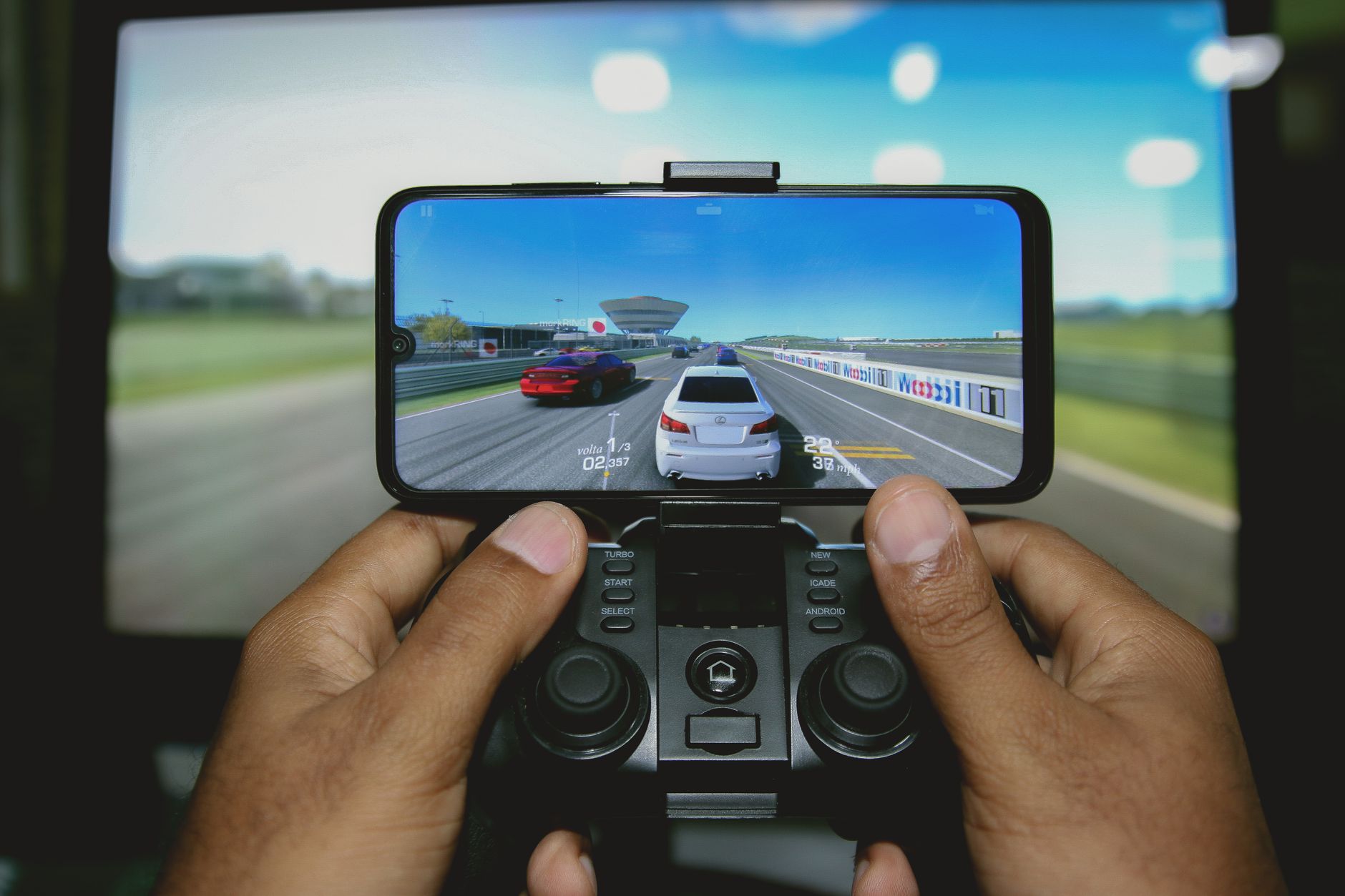
Photo by Nino Souza on Pexels
The 3 Things That Matter Most: Which Skills Actually Decide Wins?
The three skills that decide most football game outcomes are timing, spacing, and decision order. Timing affects passes and tackles, spacing creates running lanes, and decision order determines whether you choose a safe play before attempting a risky highlight move.
Here is the skeptical version: most players do not lose because the game is unfair. They lose because they react to the defender they see, not the defender who will arrive next. In Retro Bowl and Retro Bowl College, the pass is often decided before the receiver looks open; if you wait until the route is obviously clear, the safety may already be closing. In 2 Minute Football QB Legend, short completions can beat desperate deep throws because the clock and down count pressure players into bad decisions. The Wikipedia overview of American football notes that teams advance by running or passing within a sequence of downs, and the best games preserve that pressure even with arcade controls.
The three deciding skills can be simplified this way:
- Timing: Release the ball before the defender fully commits, not after the receiver is wide open.
- Spacing: Run toward empty grass, not toward the nearest visible gap.
- Decision order: Pick the safe option first, then attack the big play when the defense overcorrects.
Pitch Notes applies a similar logic when covering 2026 World Cup tactics: the best move is rarely the flashiest one, whether you are reading a gridiron defense in 4th and Goal or evaluating pressing traps in a FIFA World Cup knockout match.
[Internal Link: player stats and tactical analysis]

Photo by SAULO LEITE on Pexels
Edge Cases & Gotchas: When Is a Football Game Misleading?
A football game is misleading when it hides difficulty behind simple controls, unclear physics, or inconsistent defender behavior. The most common trap is a game that feels easy for two drives, then sharply increases interception risk, tackle range, or clock pressure without explaining the change.
The third mistake is trusting ratings without reading the game loop. Poki lists popular football games such as Retro Bowl, Retro Bowl College, Touchdown Rush, 4th and Goal 2022, and Touchdowners, while CrazyGames highlights titles including 2 Minute Football QB Legend, Return Man 2, Big Hit Football, Axis Football League, and 4th and Goal 2019. Those lists are useful, but they are not a scouting report. A 4.5-star arcade title may be perfect for a five-minute break and terrible for someone wanting tactical depth. A lower-rated physics-based title may be chaotic, but still excellent for local multiplayer laughs.
Here are the gotchas players usually miss:
- Mobile scaling: Some browser games crop route indicators on smaller screens.
- Ad interruptions: Restart timing can break rhythm in drive-based games.
- Difficulty spikes: Level 3 or drive 4 often introduces faster defenders.
- Control mismatch: Keyboard games may feel clumsy on tablets.
- Genre confusion: “Football game” can mean American football, soccer, or management simulation depending on platform search results.
For a gambling-adjacent audience, there is one more caution: do not confuse game skill with betting insight. A browser football game can sharpen tactical vocabulary, but it does not predict NFL, NCAA, or FIFA World Cup results on its own. The National Council on Problem Gambling emphasizes that responsible gambling tools and limits matter for anyone engaging with wagering products, and that caution applies even when sports content feels analytical.
Want more grounded football analysis instead of hype-driven rankings?
Verdict: Are Free Online Football Games Worth Playing in 2026?
Free online football games are worth playing in 2026 if you choose them for the right reason. They are excellent for quick entertainment and light tactical practice, but they are not all realistic simulations, and they should not be treated as betting models.
The refined position is simple: play the game that matches your tolerance for decision pressure. If you want management and repeated offensive choices, start with Retro Bowl or Retro Bowl College. If you prefer arcade movement, try Touchdown Rush or Return Man 2. If you want play-calling under pressure, 4th and Goal remains more interesting than many flashier alternatives. If you want fast quarterback reps, 2 Minute Football QB Legend is a cleaner fit than a full-team simulator. The fourth mistake players make is chasing the “best” title instead of identifying the best fit.
For Pitch Notes readers following the 2026 World Cup, the crossover is not the shape of the ball; it is the discipline of reading space. Good football games teach you to notice timing, pressure, and risk. Bad ones teach you to spam a button and blame the engine. The smart move is to use free football games as low-stakes tactical entertainment, then rely on proper match analysis, team news, player stats, and tournament context when real money or serious predictions enter the conversation.
[Internal Link: 2026 World Cup match predictions]

Photo by RDNE Stock project on Pexels
Frequently Asked Questions
Q: What is a football game?
A: A football game is a digital sports game based on football mechanics such as passing, running, tackling, play-calling, or team management. Online platforms use the term for American football titles like Retro Bowl, 4th and Goal, Return Man 2, and Touchdown Rush. Some search results may also mix in soccer games, so check the rules, field design, and gameplay before starting.
Q: How do I choose the best football game online?
A: Choose the best football game by matching the gameplay style to your preferred skill. Pick Retro Bowl for management and passing, Touchdown Rush for arcade running, 4th and Goal for tactical play selection, and 2 Minute Football QB Legend for quick quarterback decisions. If you play on mobile, test controls for one drive before committing.
Q: Are free football games actually free?
A: Most browser football games on platforms like Poki and CrazyGames are free to play. However, free usually means ad-supported, so you may see video ads, banner ads, or interruptions between sessions. Some games may offer mobile app versions with purchases, so always check the store listing before downloading.
Q: What is the difference between Retro Bowl and 4th and Goal?
A: Retro Bowl focuses more on team control, passing rhythm, and season-style progression, while 4th and Goal emphasizes play-calling and short tactical sequences. Retro Bowl is better for players who enjoy building momentum over multiple games. 4th and Goal suits players who want immediate down-by-down pressure.
Q: Why does my football game lag on mobile?
A: Mobile football games usually lag because of browser load, device age, touch input delay, or ads refreshing in the background. Close extra tabs, rotate the screen if the game supports landscape mode, and use a modern browser like Chrome or Safari. If lag continues, choose slower tactical games instead of fast runner games.
Q: Can football games help with real sports betting?
A: Football games can help you think about space, timing, and risk, but they should not be used as betting evidence. Browser games simplify real football too much to predict NFL, NCAA, or FIFA World Cup outcomes. For wagering decisions, use verified team news, injury reports, player statistics, market odds, and responsible gambling limits.
Q: What requirements do I need to play online football games?
A: You usually need only a modern browser, stable internet, and a keyboard, mouse, or touchscreen. Desktop play is often better for precision in titles like 4th and Goal, while mobile works well for simple runner games. For the smoothest experience, use an updated device and avoid playing with multiple heavy tabs open.
For daily tactical coverage, player stats, and 2026 tournament insight from Pitch Notes, continue here.
Thank you for reading this dispatch.
Pitch Notes · The Digital Broadsheet · Issue No. 001